

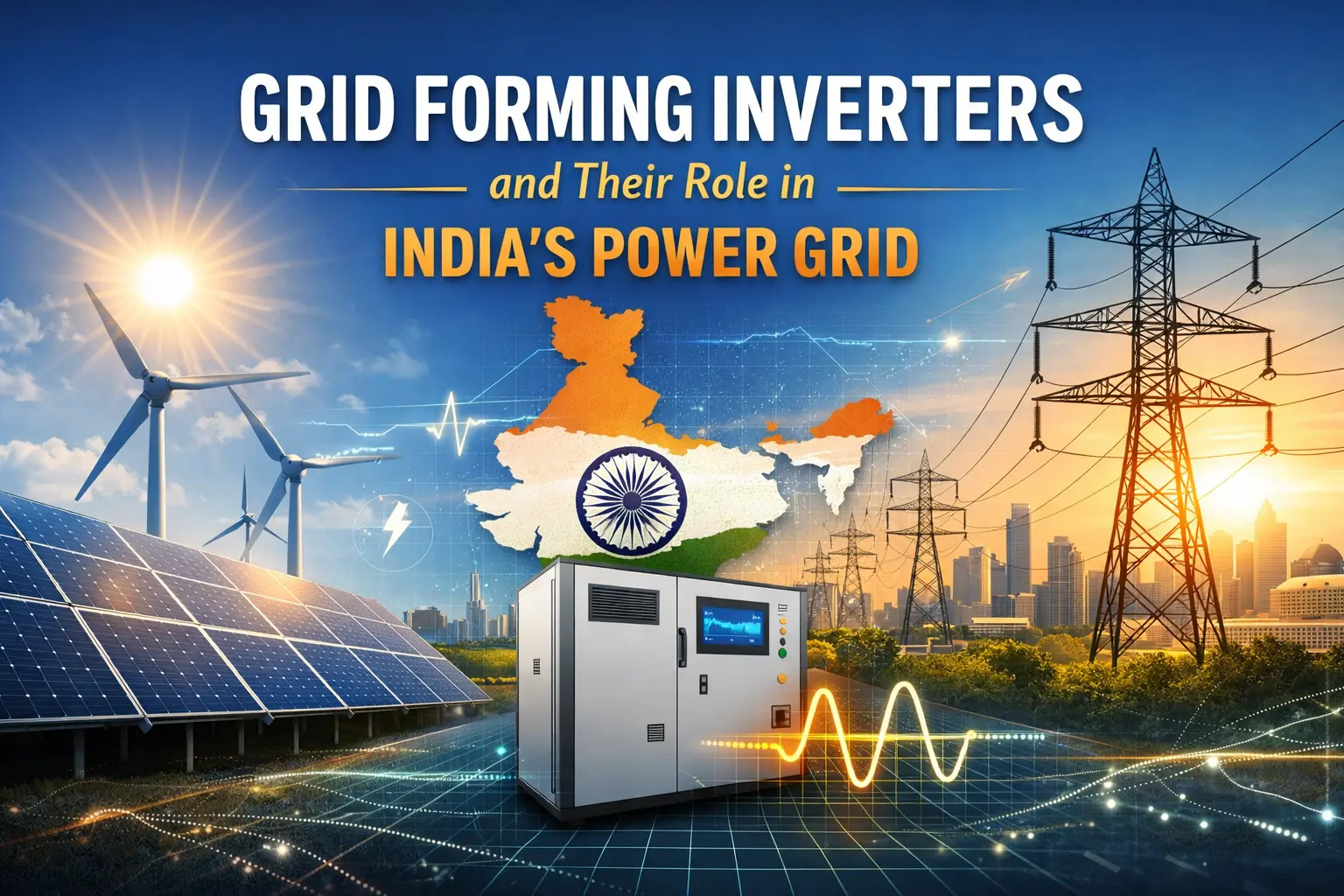
India’s power system is going through one of the biggest transformations in its history. With rapid growth of solar, wind, battery energy storage systems (BESS), and other inverter-based resources, the grid is no longer dominated only by large thermal or hydro power plants. While this shift is essential for clean energy targets, it also introduces new technical challenges—especially related to grid stability. This is where Grid Forming Inverters (GFIs) become extremely important.
This blog explains grid forming inverters in simple terms, why they are different from conventional inverters, and how they can support a reliable and resilient Indian power system.
Understanding the Changing Nature of the Grid
Traditionally, India’s electricity grid has been supported by large synchronous generators such as coal, gas, and hydro power plants. These machines naturally provide inertia, voltage support, and frequency stability because of their rotating mass.
However, solar PV, wind, and battery systems connect to the grid through power electronic inverters. These inverter-based resources (IBRs) do not have physical rotating mass. As their share increases, the grid starts losing natural inertia, making it more sensitive to disturbances like sudden load changes, faults, or generator outages.
Without new control strategies, this can lead to frequency fluctuations, voltage instability, and even large-scale blackouts.
What Are Grid Forming Inverters?
Grid forming inverters are advanced power electronic devices that can actively establish and regulate grid voltage and frequency, instead of simply following an existing grid signal.
In simple words:
- Grid-following inverters wait for the grid to tell them the frequency and voltage
- Grid-forming inverters behave like a virtual power plant and create those signals themselves
This capability allows grid forming inverters to act similar to conventional generators, even though they have no rotating parts.
Grid Following vs Grid Forming: Key Differences
Grid-following inverters depend on a strong grid reference. If the grid is weak or disturbed, they may trip or stop injecting power.
Grid forming inverters, on the other hand:
- Can operate in weak or even zero-inertia systems
- Can black-start a grid without external voltage reference
- Provide fast frequency and voltage support
- Improve system stability during disturbances
This makes them especially valuable in a future grid dominated by renewables.
Why Grid Forming Inverters Are Important for India
India is targeting very high renewable energy penetration along with large-scale battery storage deployment. As conventional generators reduce their operating hours, grid stability services must come from new technologies.
Grid forming inverters can help India by:
- Replacing lost inertia with synthetic or virtual inertia
- Supporting frequency control in low-inertia conditions
- Improving voltage regulation in renewable-rich areas
- Enabling reliable operation of islanded or microgrids
- Supporting faster recovery after grid disturbances
They are particularly useful in regions with high solar and wind penetration, such as Rajasthan, Gujarat, and southern states.
Key Functions of Grid Forming Inverters
Grid forming inverters are not just power converters. They perform several critical grid-support functions:
1. Voltage and Frequency Control
They establish stable voltage magnitude and frequency, acting as a reference for other connected resources.
2. Virtual Inertia
By responding quickly to frequency changes, they mimic the inertial response of traditional generators, helping slow down frequency deviations.
3. Fault Ride-Through Capability
They can remain connected and support the grid during faults instead of disconnecting immediately.
4. Black Start Capability
Grid forming inverters can energize a dead grid, making them valuable for restoration after blackouts.
5. Seamless Operation in Weak Grids
They perform well even when grid strength is low, which is common in remote renewable zones.
Applications of Grid Forming Inverters in India
Grid forming inverters can be deployed across multiple applications:
- Battery Energy Storage Systems (BESS) for frequency and inertia support
- Solar and wind plants integrated with storage
- Microgrids in remote or islanded locations
- Hybrid renewable power plants
- Grid restoration and black start resources
As India moves toward round-the-clock renewable power, these applications will become increasingly common.
Technical and Regulatory Challenges
While grid forming technology is promising, its adoption in India also comes with challenges:
- Need for clear grid codes and technical standards
- Coordination between multiple grid forming units
- Protection system redesign for inverter-dominated grids
- Testing and validation under Indian grid conditions
- Higher initial cost compared to conventional inverters
Addressing these challenges will require collaboration between system operators, manufacturers, regulators, and researchers.
The Road Ahead for India
Grid forming inverters are expected to play a critical role in India’s future power system. As renewable penetration increases and conventional generators retire or operate flexibly, GFIs can ensure that reliability and resilience are not compromised.
Pilot projects, detailed studies, and gradual integration into grid codes will help India transition smoothly toward a low-carbon, inverter-dominated grid.
Source 🡇